A Brand Centre that brings teams together and grows in step with CAF
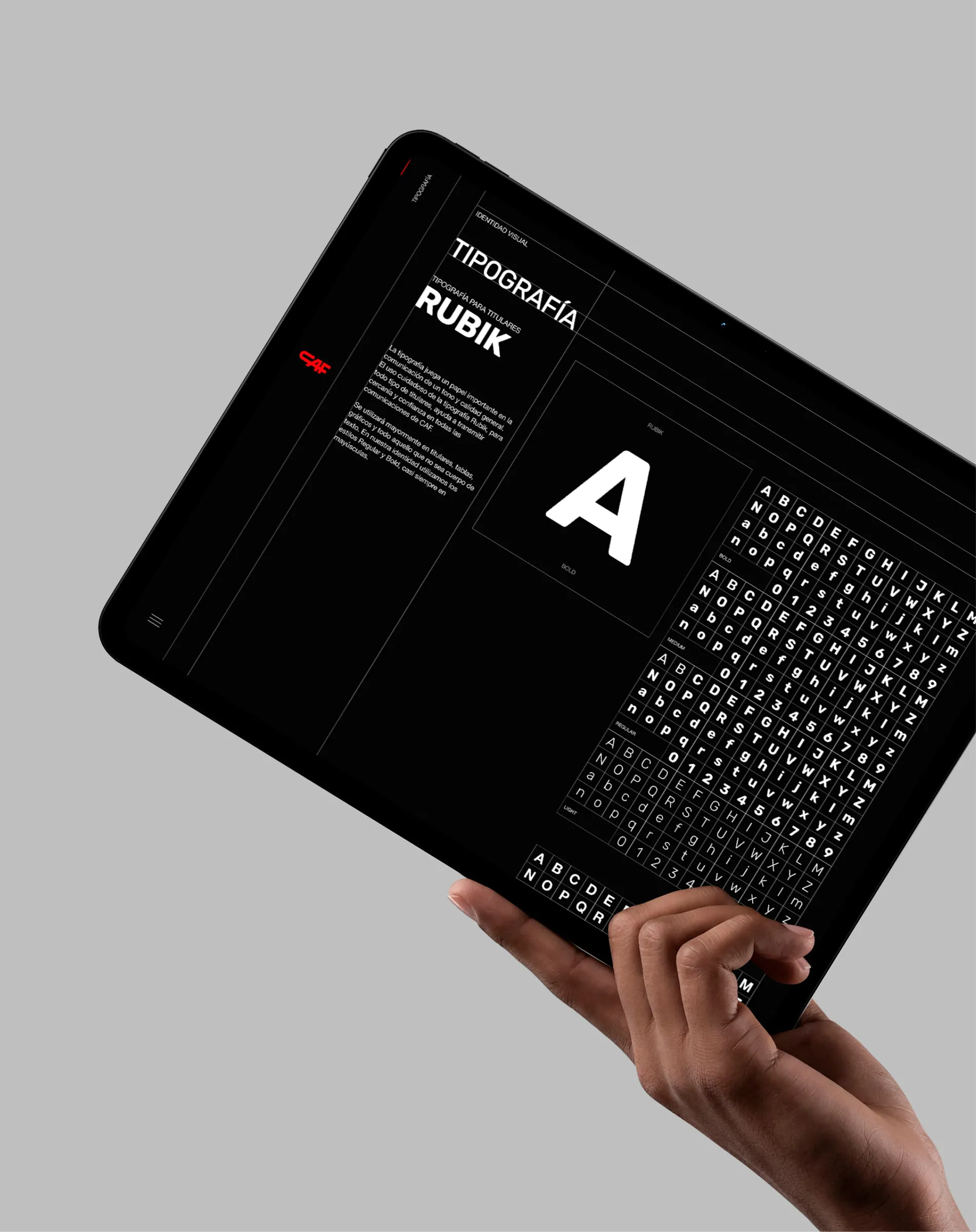
We designed and developed CAF’s Brand Centre, a bespoke digital platform that brings together brand guidelines and resources in a single environment. It is a space that makes it easier to consult and apply these guidelines, improves access to materials and enables teams to work independently, whilst maintaining brand consistency across the organisation.
FROM PROJECT-BASED FILING TO CO-BRANDING MANAGEMENT
CAF had an extensive archive of logos, photographs, videos, presentations and templates used by internal teams, subsidiaries, suppliers and the media. The Marketing team centralised the management and distribution of these resources via a shared network organised by project – a model that needed to evolve as the resources grew and their potential uses expanded.
The main difficulty lay in finding and reusing materials beyond the project for which they had been created. A photo shoot of the Lisbon tram, for example, might include images useful for communicating concepts such as urban mobility, sustainability or the passenger experience, but these remained tied to their original project.
In an organisation with an international presence, this situation made it difficult for different teams and collaborators to access resources, led to recurring requests to the Marketing department and complicated the use of updated versions.
It was necessary to move towards a more accessible, organised and autonomous management model, capable of meeting the needs of a global brand.
The challenge was to transform CAF’s resource management into a shared system that would enable any team to identify, understand and apply the brand consistently and independently.
UNDERSTANDING, IDENTIFYING AND USING THE BRAND
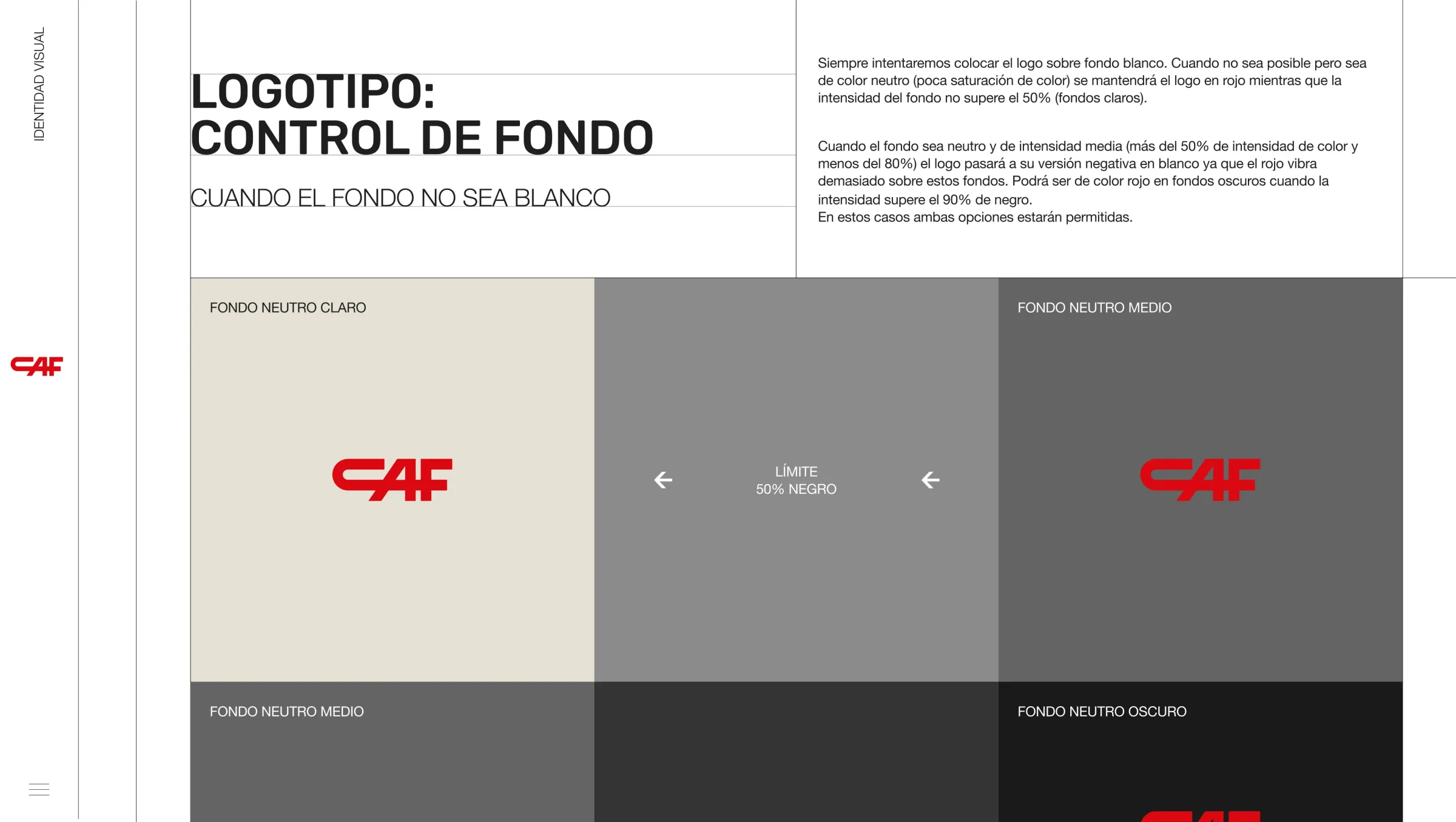
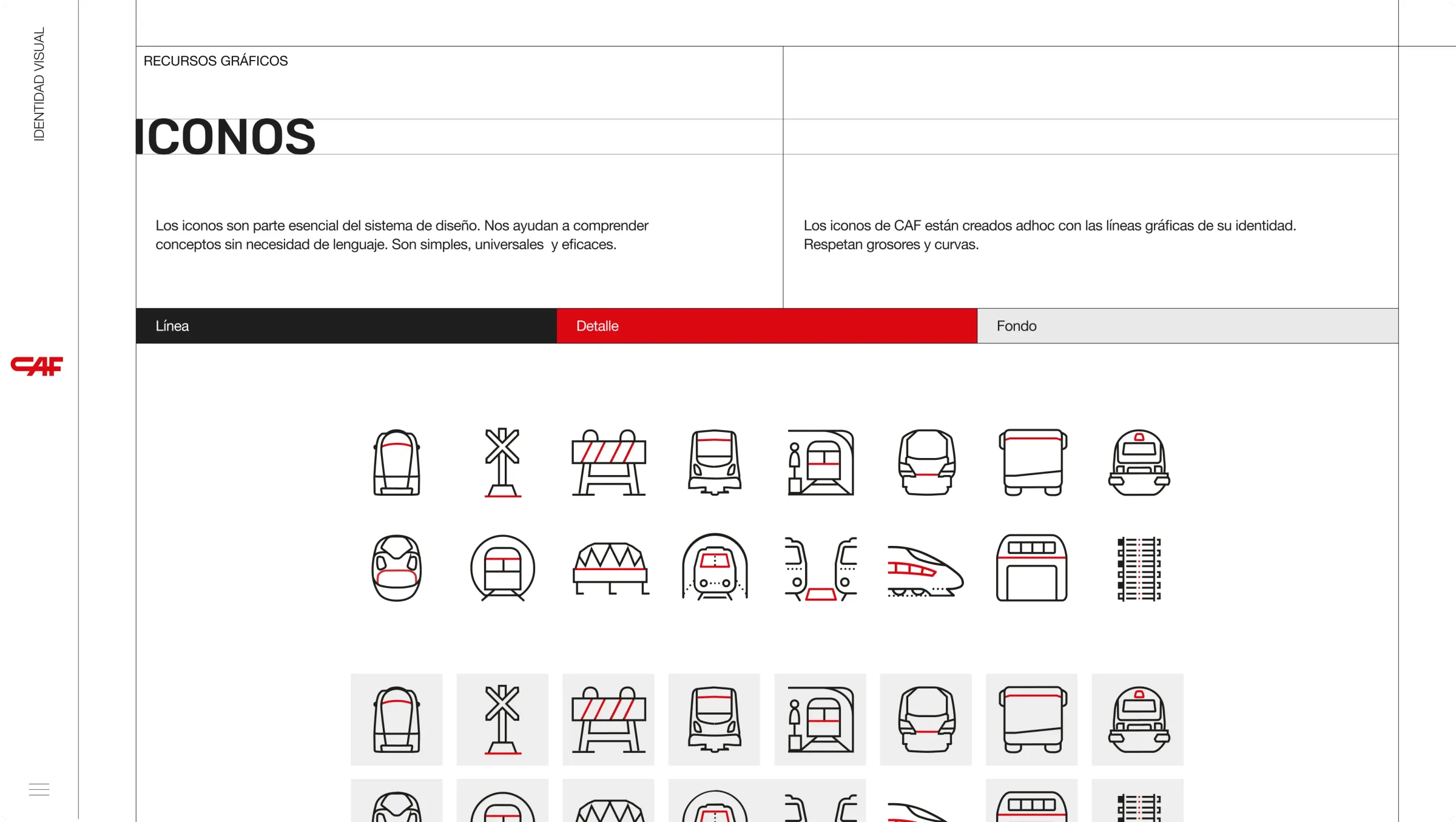
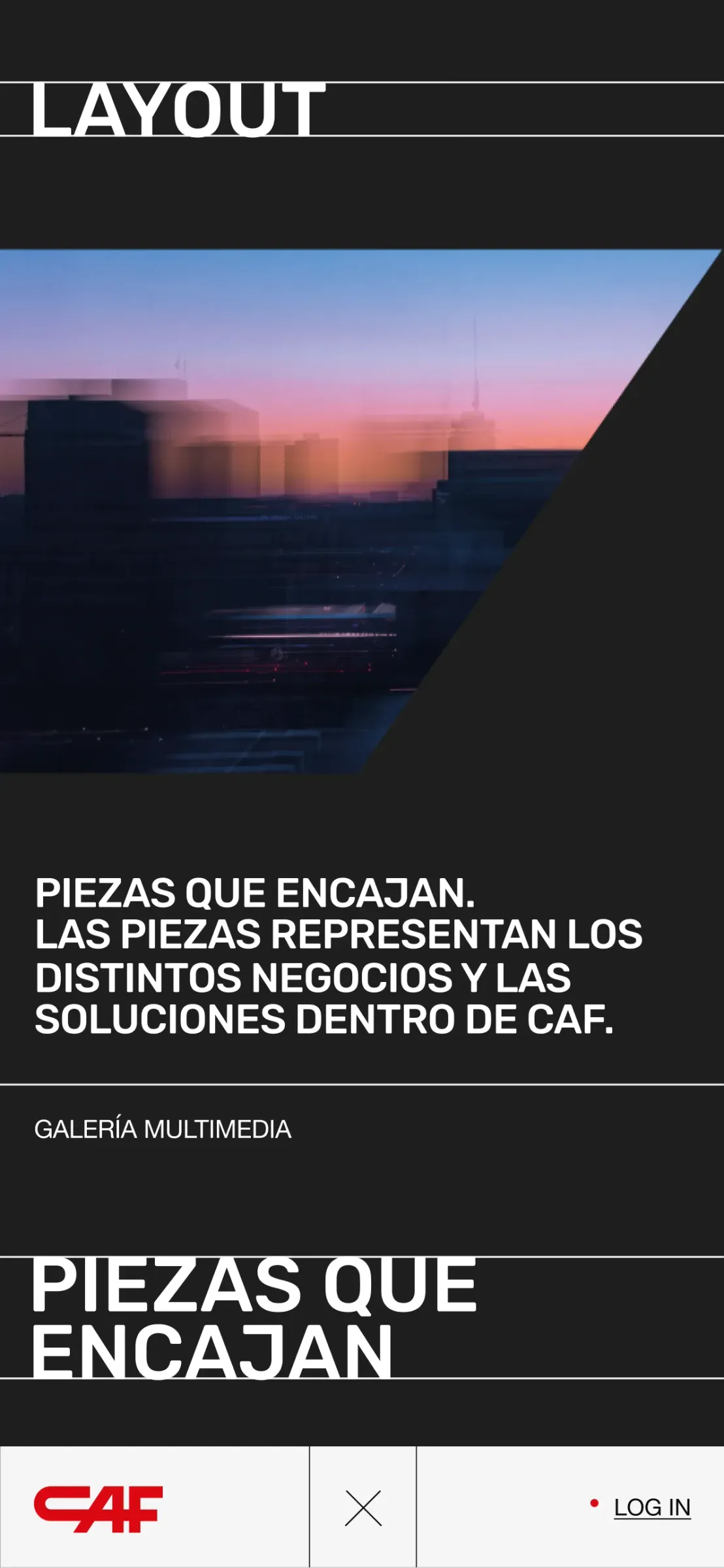
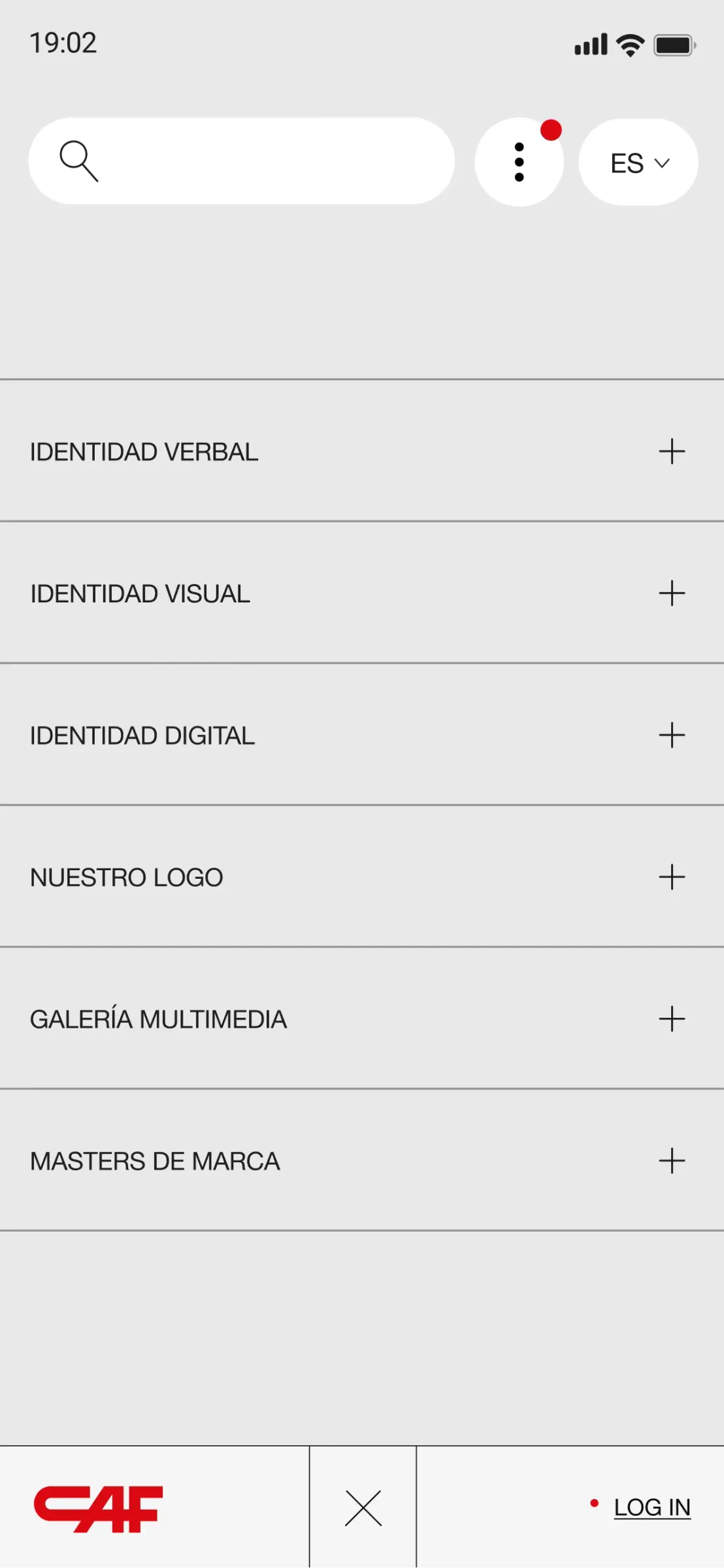
The Brand Center is organized around two complementary spaces. On one hand, the Brand Guidelines bring together CAF’s verbal, visual, and digital identity standards—including the logo, typography, color palette, photographic style, UX/UI system, best practices, and templates for key touchpoints. On the other, a multimedia gallery centralizes the photographs, videos, and other assets needed to put these guidelines into practice.
Through user experience design and content architecture, we developed a navigation structure that simplifies access to information and addresses the specific needs of different user profiles. The platform integrates both public and private content, allowing the marketing team to determine which materials are openly accessible and which require user authentication.
In addition to centralizing guidelines and assets, a system of roles and permissions strengthens brand governance by defining which content each user profile can view or manage. For CAF staff, access is integrated with the existing corporate authentication system, creating a unified environment for both reference and management.
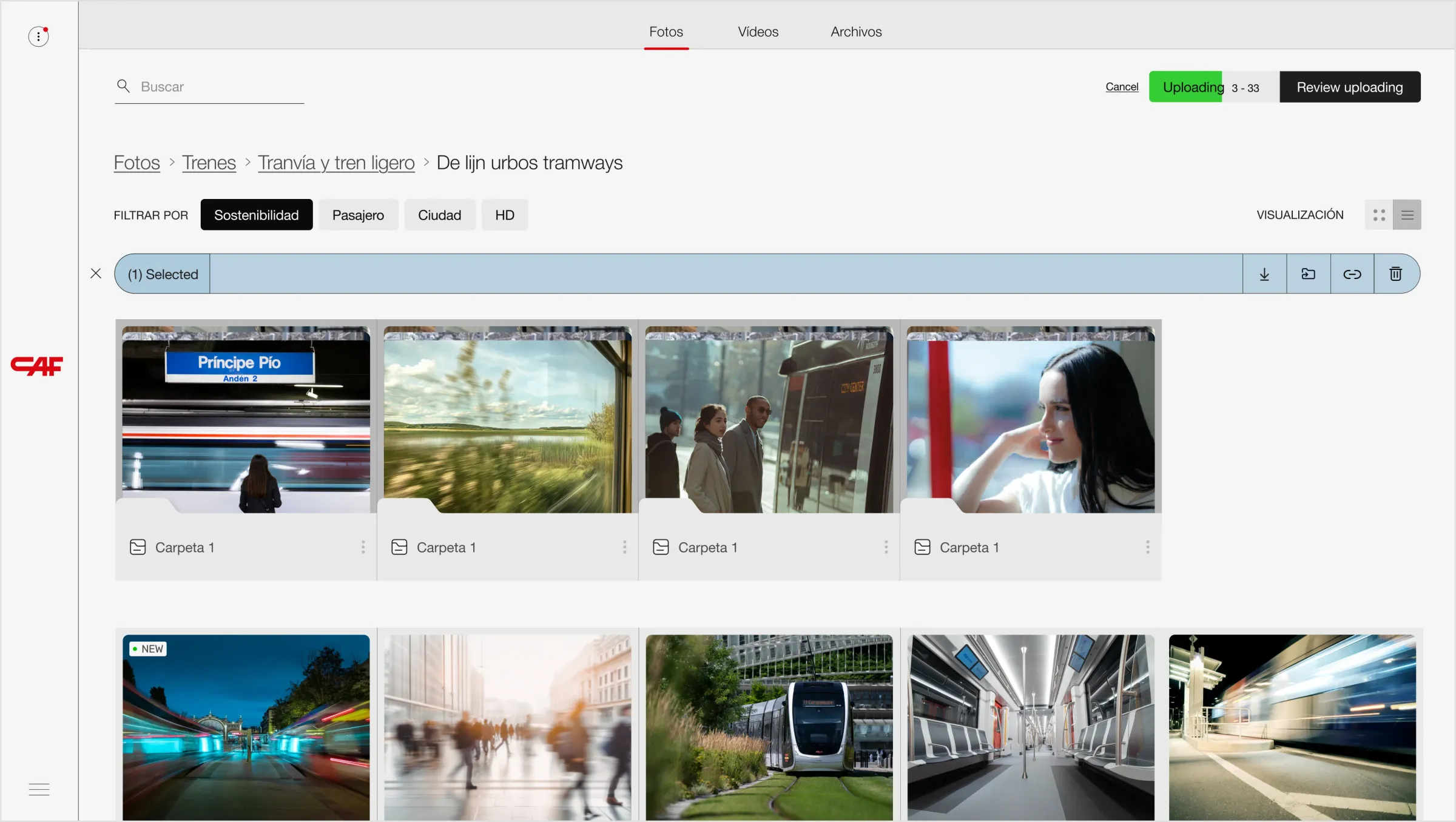
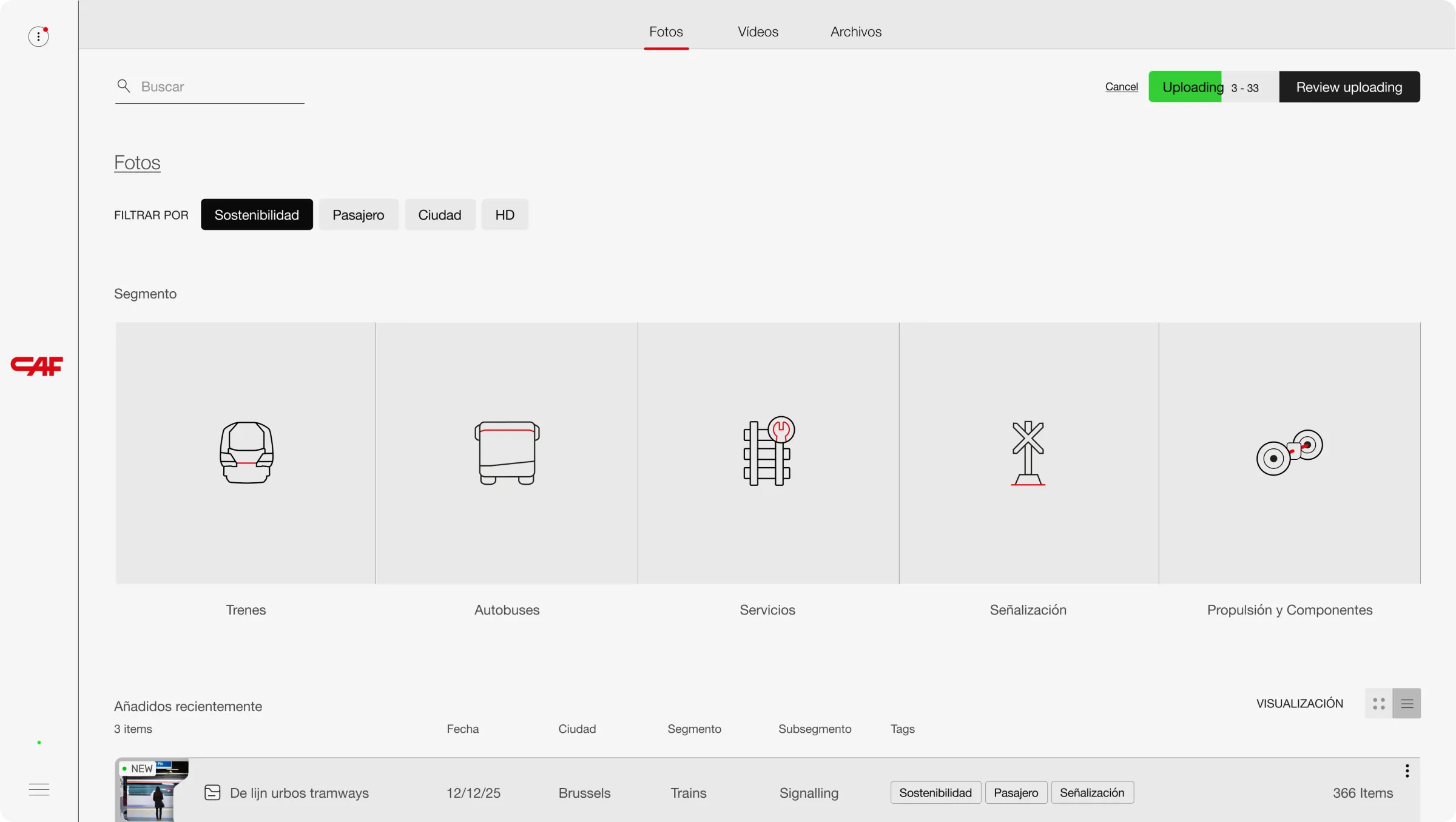
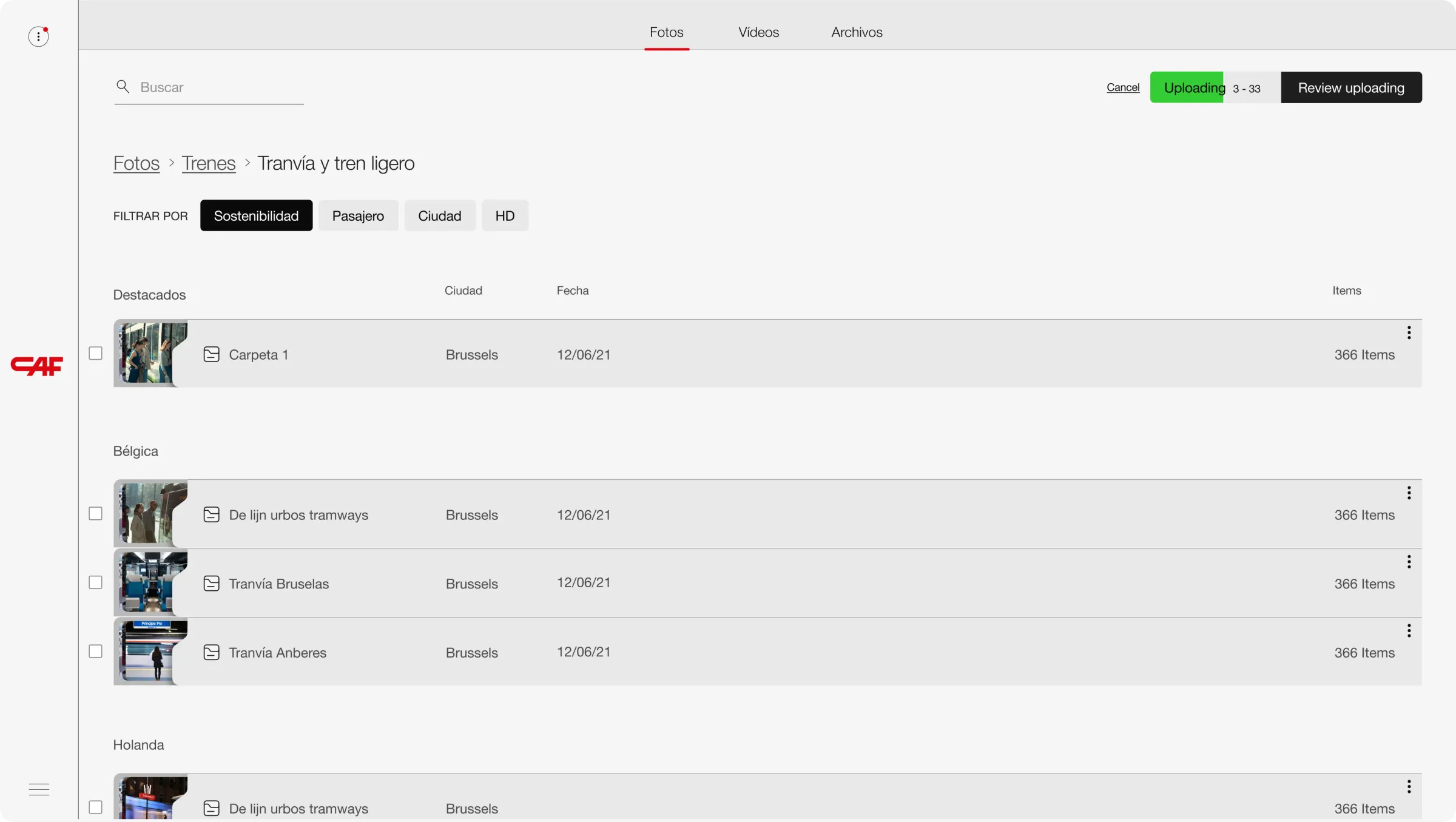
The multimedia gallery organizes assets by business line, category, and subcategory, while incorporating cross-functional tags that allow resources to be discovered beyond their original project context. A search tool combined with various filters makes it easy to locate items by keyword, format, category, or tag—with features for previewing, viewing metadata, and performing bulk downloads.
AUTONOMY TO KEEP THE BRAND UP TO DATE
For the Brand Center to function as an everyday tool, it wasn’t enough to simply make resources easy to access; it also had to allow for simple, autonomous content management.
To this end, we designed and developed a block-based visual editor that enables the CAF marketing team to update guidelines and content directly within the interface. Changes are visible in real time, streamlining the editing process and eliminating the need to rely on technical staff for every update.
The multimedia gallery follows this same logic. It allows for the uploading of folders containing large volumes of files, lets users track upload progress, and enables them to continue working while the process completes. During the upload, administrators can add metadata and tags, ensuring that every resource is correctly classified and easily discoverable from the outset.
This autonomy transforms the Brand Center into a dynamic environment where guidelines, templates, and materials can be kept up to date, evolving alongside the organization’s needs.
A platform designed to evolve alongside CAF, with the autonomy to manage its content and the flexibility to adapt to the organization’s changing needs.
A TAILOR-MADE SOLUTION FOR A GLOBAL ORGANIZATION
CAF’s requirements called for a level of customization that a standard SaaS solution could not easily provide. The platform needed to align with their specific content structure, access profiles, corporate systems, and security requirements, while also offering a multilingual experience in Spanish, Basque, and English.
Furthermore, it was essential that the platform be deployed on CAF’s own infrastructure. A custom-built solution allows for full control over data and hosting, enables the repository to expand without reliance on external storage plans, and avoids licensing models tied to the number of users.
To address these needs, we designed and developed a solution based on a modular technological architecture, which simplifies both maintenance and future evolution. The platform includes a proprietary content management system, an authentication system integrated with CAF, and a structure designed to accommodate the addition of new features.
From experience design and content architecture to the permissions system, visual editor, and management processes, every element has been tailored to the specific realities of CAF.
The result is a flexible, scalable platform that combines design and technology to facilitate brand management and support the organization’s ongoing evolution—free from the limitations of a closed, off-the-shelf tool.

Credits
- Leire Luengo
- Naiara Borderia
- Igor Nieto
- Enara Etxaniz
- CAF